Piano with Rebecca B
Your Skill Profile Map
Stop guessing your level. Find what's blocking your progress.
Find your own shape, then pick your next piece on purpose.
Companion to the video.
Two pieces at the "same" difficulty level on a list can ask for completely different skills. That is why one is doable and the next one feels impossible. It isn't you, and it isn't a sign you are going backwards.
So here is the replacement. 6 physical skills. You sit at a different place on each one, and that unique shape is your real profile.
Other things influence your musical growth, but these 6 are the physical ones, and they are the ones you can see in the score.
Other things influence your musical growth, but these 6 are the physical ones, and they are the ones you can see in the score.
Four of the most respected leveling systems place the Debussy Arabesque #1 six levels apart.
The 6 skills
Click a skill. Each one runs from something an early intermediate player can hold to something a concert pianist works at for years.
Playing fast
The one everybody thinks of first. Are the fingers flying? The range inside this single skill is enormous, from a moderate running passage to a Chopin etude.
Starting
Short scale and 5-finger runs. A few notes at a time, at a tempo you hold comfortably.
Middle
A moderately difficult running passage. Longer lines, thumb crossings, more changes of direction, a mix of large and small intervals.
Far end
Chopin, Rachmaninoff etudes. Speed sustained for pages, with tone and shape intact.
What makes it harder
The tempo itself, and how long you hold it. How many notes in a row before a rest. Whether the intervals are large or change size. Thumb crossings, and how much heavy fast work the thumb does.
Sheet music examples
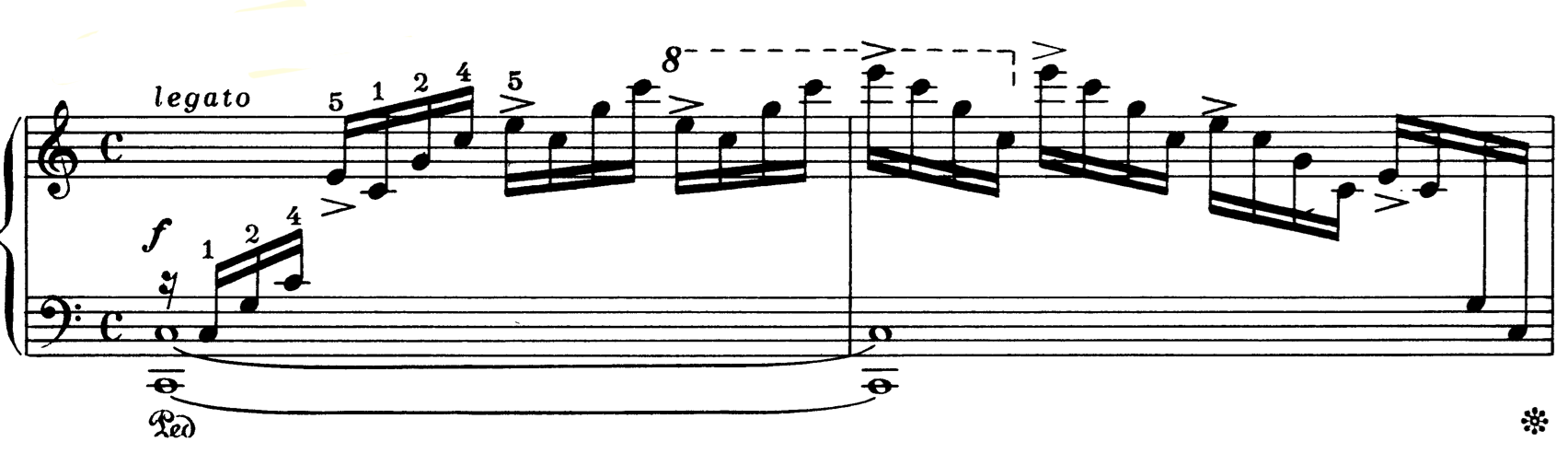
Chopin Etude Opus 10 No. 1
Leaps
Any time your hand is on the keys and has to move somewhere else, even a note or 2, that is a leap.
Starting
Moving from one 5-finger pattern to another.
Middle
Small to medium size leaps, not that frequent.
Far end
Rachmaninoff etude. Faster leaps, and further to go.
What makes it harder
Distance: a third, an octave, 2 octaves and more. How little time you get between the 2 landings. Whether both hands leap at once, so your eyes can only help one of them. Landing without an accent, instead of just landing on the right note.
Sheet music examples
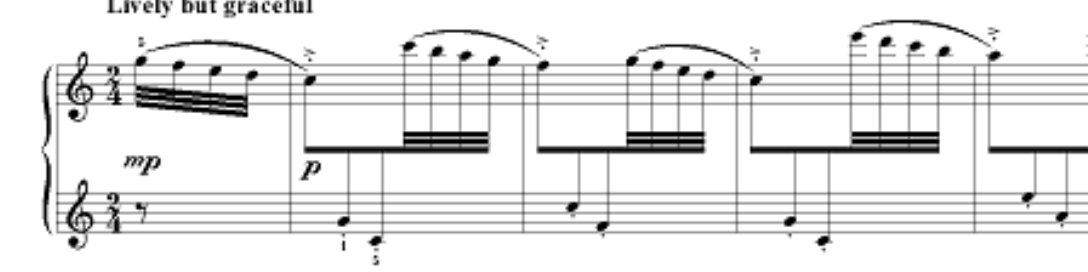
Kabalevsky A Little Joke
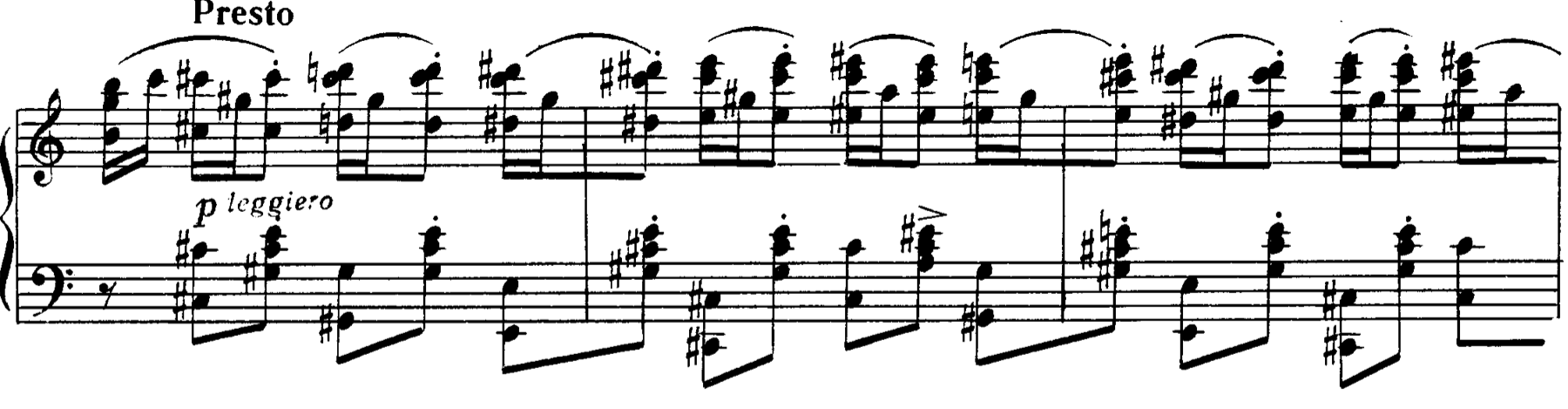
Rachmaninoff Etude-Tableau Opus 39 No. 6
How many notes at once
The more notes under the hand at the same moment, the heavier the keys feel, the more there is to think about, and the harder it is to track with your ear what is actually coming out.
Starting
Single-note melody. 1 note in the top hand, simple support underneath.
Middle
Chopin waltz, as written. The melody thickens to 2 and 3 notes and the hand carries more weight.
Far end
The full-texture version. Fistfuls of notes, and you still have to hear every strand.
What makes it harder
2 notes, then 3, then 4, then 5 in one hand. How wide the chord is under one hand. Chords you're not familiar with. Whether the thick chords also have to move quickly. Whether 1 note inside the chord has to sing louder than the rest.
Sheet music examples
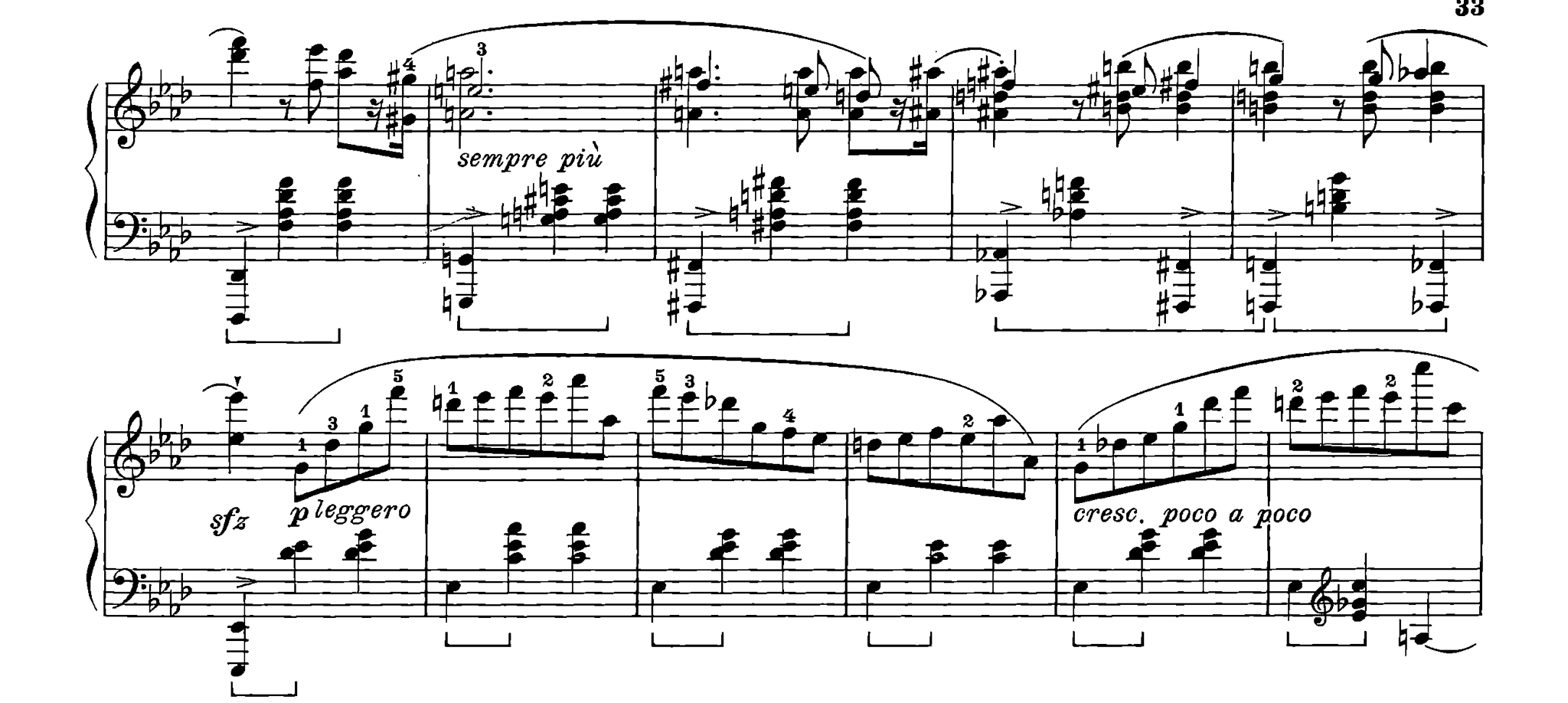
Chopin Waltz Opus 42
How many different things at once
Not how many notes, but how many separate jobs. This is the hand-independence skill, and it is the one that quietly stops more people than any other.
Starting
One hand plays, one hand rests. Nothing to coordinate yet. Then both hands doing almost the same thing, the way Kabalevsky writes.
Middle
Each hand doing something different. 2 lines with their own shape, running at the same time.
Far end
5 or 6 things at once, especially a fugue.
What makes it harder
How different the 2 parts are from each other. Whether one hand holds a note while the same hand plays others. Chromatic writing and small leaps layered on top of the split.
Sheet music examples
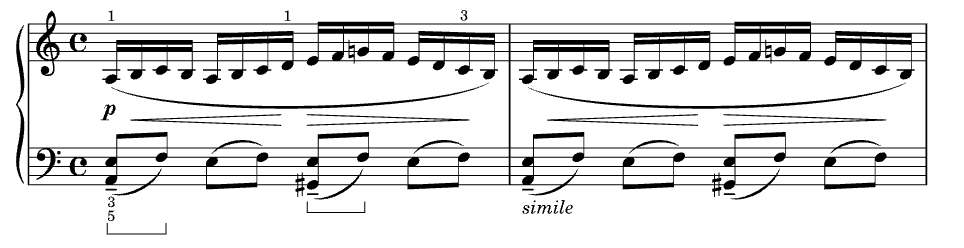
Kabalevsky Opus 27 No. 13
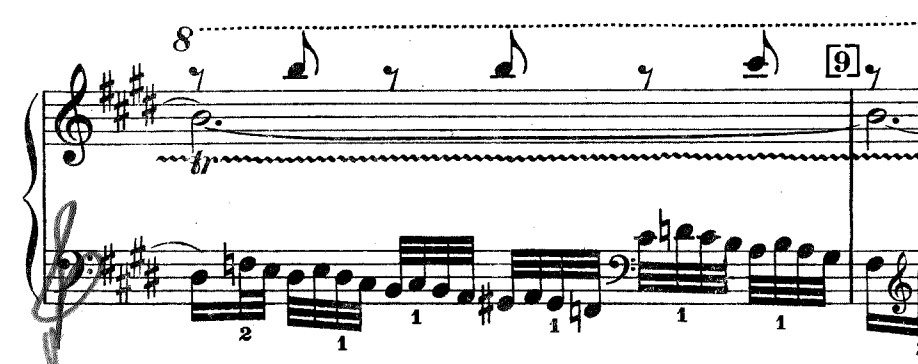
Beethoven Sonata Opus 109
Rhythm
Quarters, eighths and 16ths are one thing. 2 hands running different rhythms against each other is another thing entirely.
Starting
Quarters, eighths, 16ths. A Bach example sits here. Steady subdivision, nothing fighting it.
Middle
Polyrhythms and cross rhythms. 3 against 2, and the hands pulling against each other on purpose.
Far end
Syncopation with grace notes. Changing and irregular meters, unusual polyrhythms.
What makes it harder
Leaps and rubato. Changing speeds.
Sheet music examples
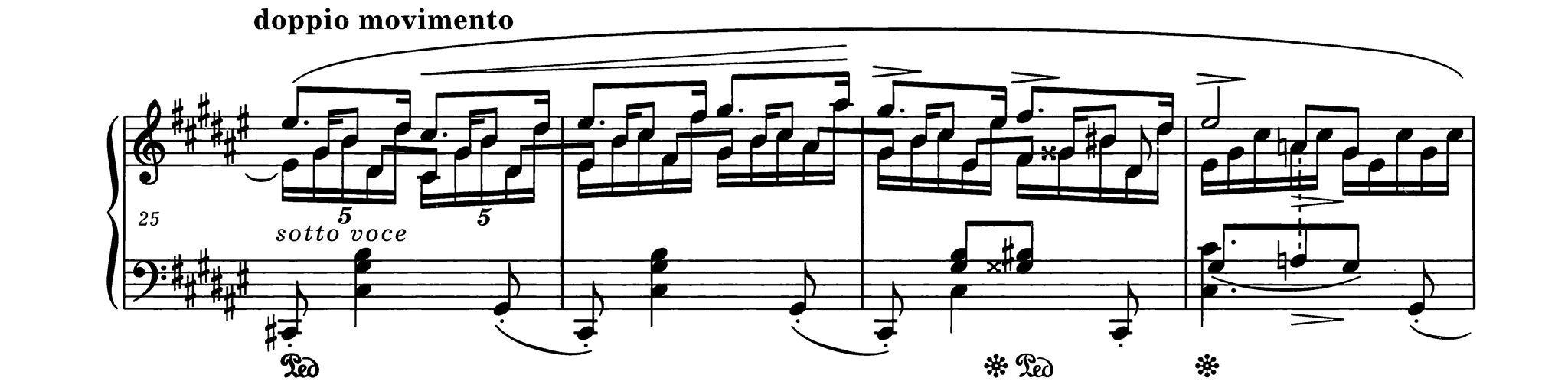
Chopin Nocturne Opus 15 No. 2
Pedaling and tone control
The last skill, and the one that separates notes from music. It runs from no pedal at all, to clean changes on the harmony, to pedaling that shifts inside a chord while you are also voicing it.
Starting
No pedal. The fingers do all the connecting.
Middle
Straightforward pedaling. Clean changes on the harmony. Where anyone new to pedaling should begin.
Far end
Complicated pedaling. Half pedal, flutter pedal, pedal crescendo and diminuendo. Tone control: producing 2 or 3 different tone colors at the same time.
What makes it harder
How often the pedal has to change. Whether a note has to be held through the change. Voicing on top of it: top note loudest, bass second, middle quietest. Playing 2 notes quietly while holding another one down.
Sheet music examples
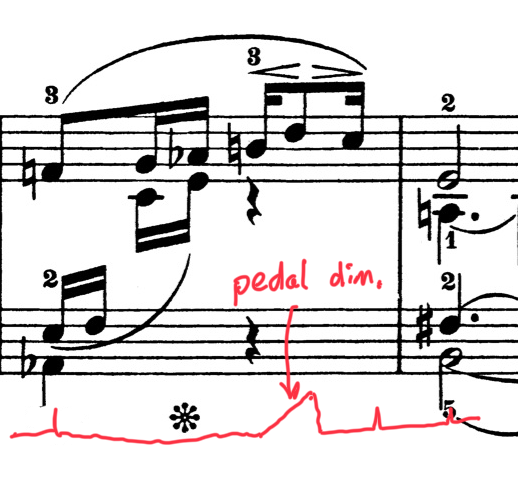
Grieg Arietta Opus 12 No. 1
Why more practicing won't fix it
Either the piece has too many unfamiliar skills at once, so there is no foothold anywhere, or it needs a refined version of a skill you are still learning rough. New coordination is always rough first. Demand the polished version now and you fight both battles at the same time.
Your practice history already has the answers
You don't need a test, and you don't need a teacher for this part.
1
Make 2 lists
What came together easily. What stalled no matter what.
2
Go to the exact spot
The measure, or the beat. Not "this page was hard."
3
Name which skill
Which of the 6 was that spot asking for?
4
Find the repeat offender
The same skill across 3 or 4 stuck spots is your blocker.
5
Check the easy list
Those skills are your strengths. Now you have the whole shape.
Then pick a piece that plays to what you already do well and asks for 1 weak skill at a level where you can succeed. Work that skill across several pieces in a row, not one. 1 piece with leaps teaches you to leap in 1 situation. 4 pieces with leaps build the skill into your hands.
Want me to help you find your shape?
Piano with Rebecca B is my community for adult pianists who want to practice smarter. Bring me the passage that keeps stopping you and I will tell you which skill it is asking for.
6 live events every month
7 days free
Then $12 a month
Weekly Open Door live with me, 2 performance workshops a month, the 28 Day Piano Journey, and 350+ adult pianists who practice the way you are about to.
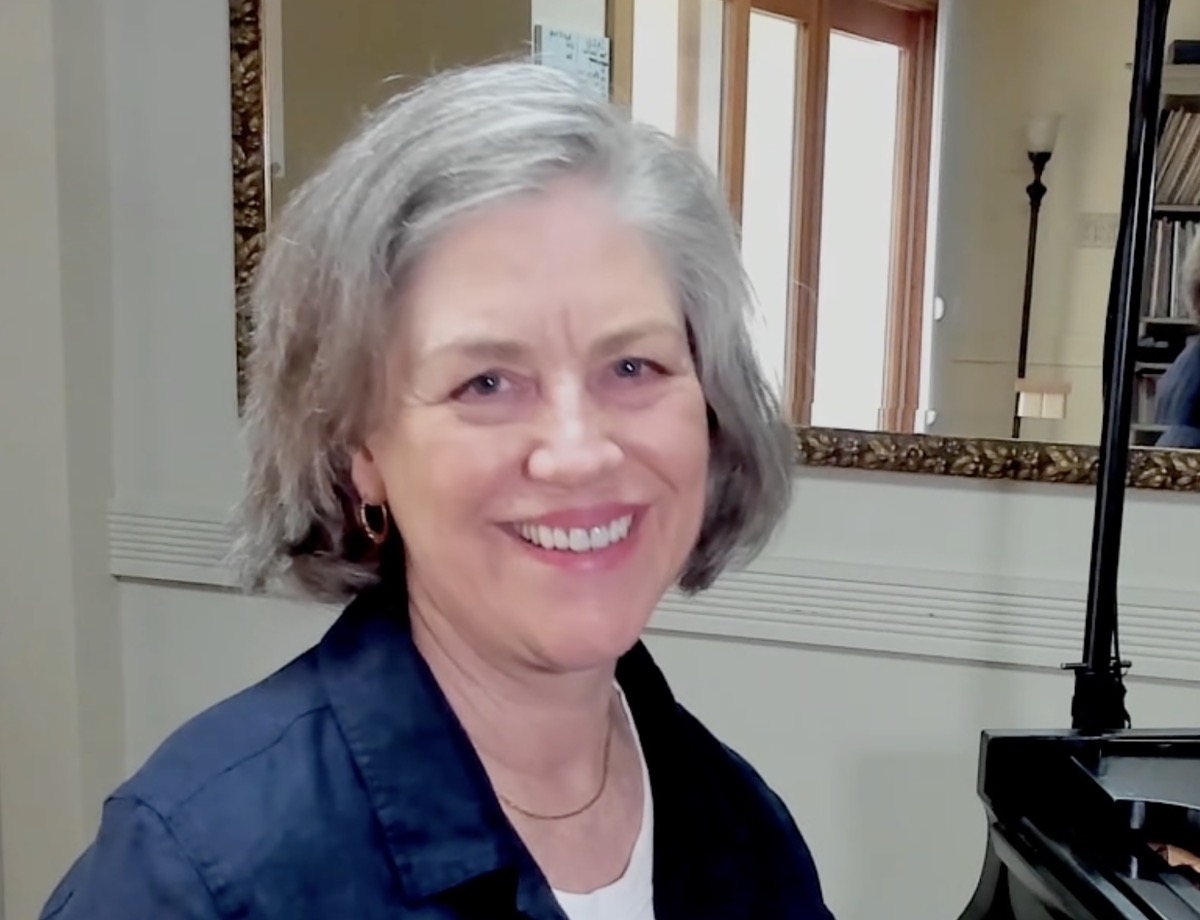
Rebecca Bogart has taught piano for 50 years and performed at Carnegie Hall. Companion resource to the video "Why You're Not an Intermediate Pianist."

[email protected] | (+1) 510-526-1787
COPYRIGHT REBECCA BOGART PIANO | PRIVACY POLICY | TERMS OF SERVICE | COOKIE POLICY | ALL RIGHTS RESERVED